
The I AM Series
The Journey in Christ
“Before Abraham came into existence, I AM.”John 8:58
The Journey in Christ
“Before Abraham came into existence, I AM.”John 8:58
Seven times in John’s Gospel, Jesus takes the holy name God gave Moses — I AM — and fills it in: the Bread, the Light, the Door, the Shepherd, the Resurrection, the Way, the Vine. Each one a door into who He is, and an invitation to walk the road in Him.
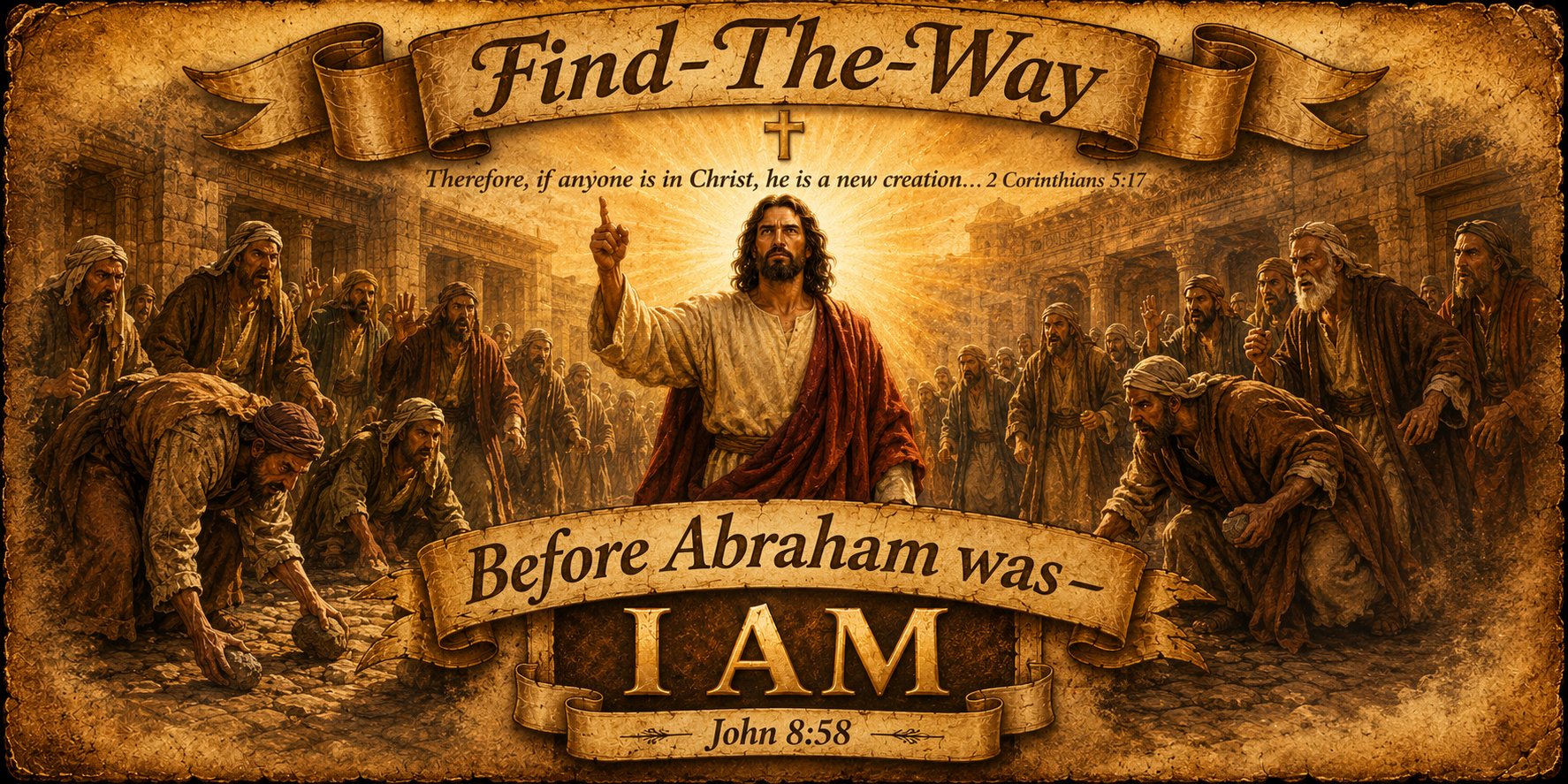
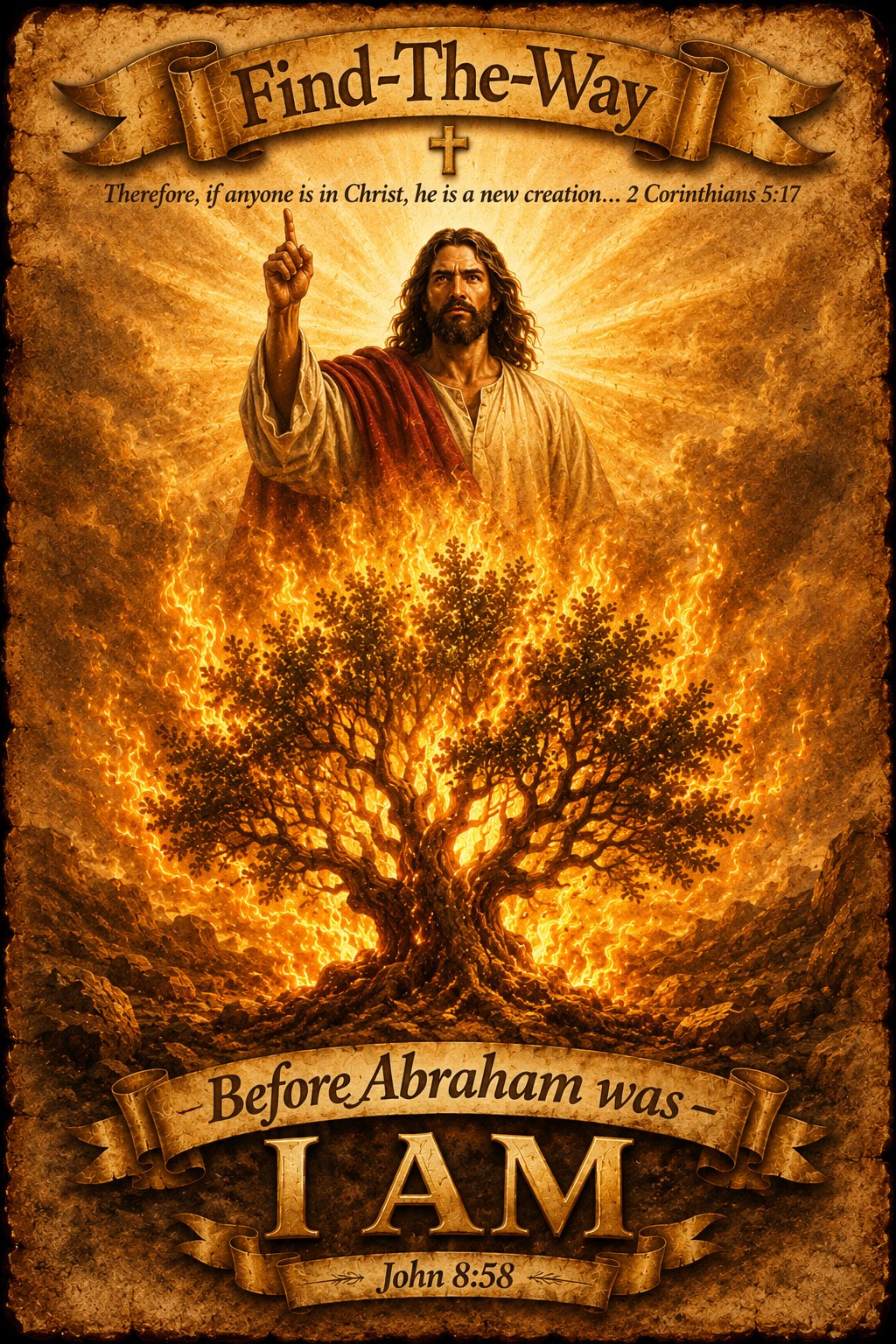
At the burning bush, God gave Moses His name: I AM WHO I AM (Exodus 3:14). Centuries later, in the temple courts, Jesus took that very name onto His own lips.
“Before Abraham came into existence, I AM.” The crowd reached for stones — because they understood exactly what He had claimed. This is the heartbeat of the series: the great I AM, in the flesh.
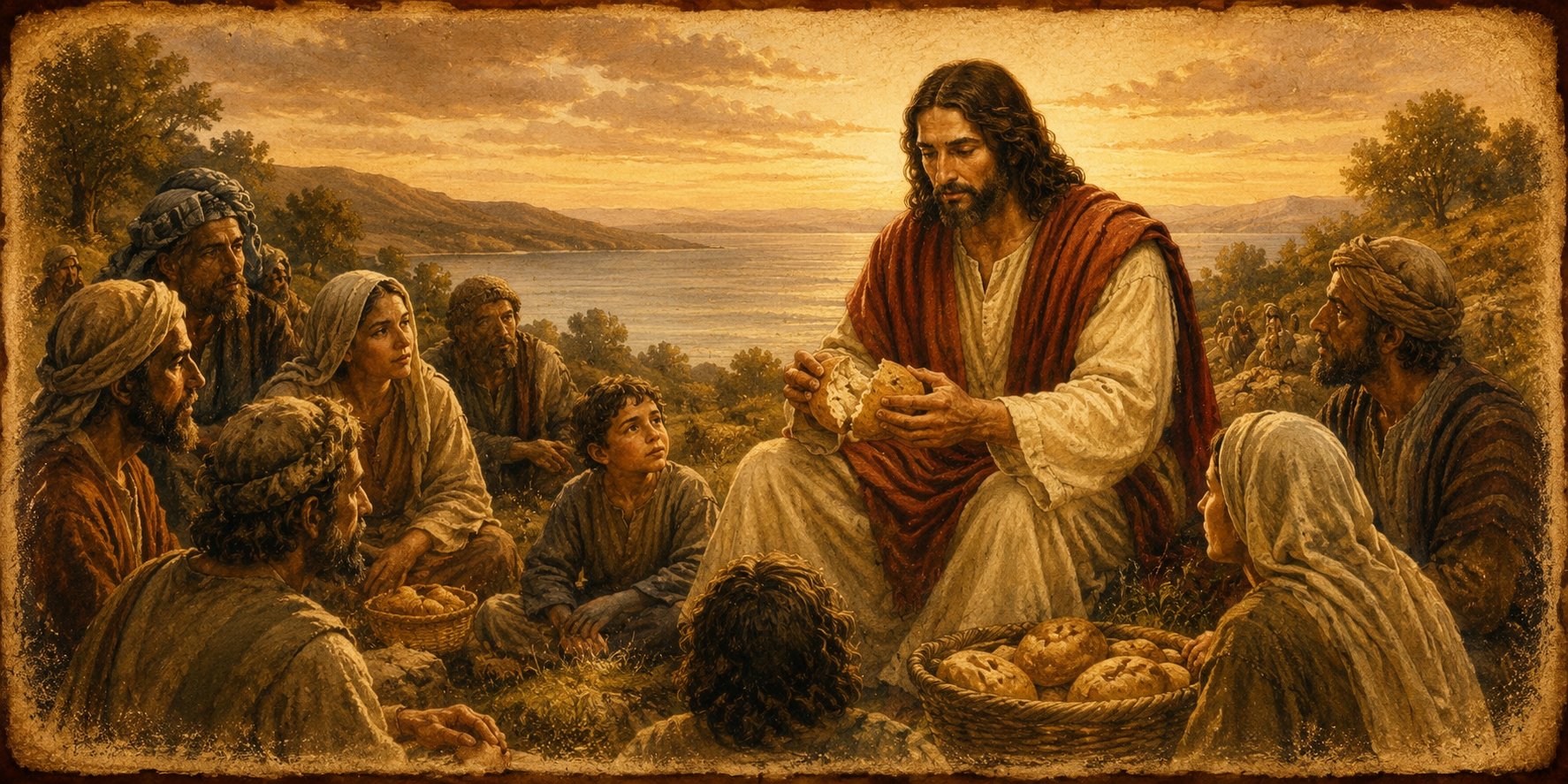
“I am the bread of life. Whoever comes to me will not be hungry, and whoever believes in me will never be thirsty.”
He is the soul’s true food — the hunger beneath every hunger.
“I Am the Bread of Life,” is the moment where the Shepherd becomes the Sustainer. The flock that entered through the Gate and learned to hear His voice now sits to be fed.
Location: Near Capernaum, after the feeding of the five thousand (John 6). The crowd follows Jesus, seeking more bread, but He redirects their hunger toward eternal nourishment.
Atmosphere: The disciples and people are still amazed by the miracle, yet confused — they want physical provision, but Jesus speaks of spiritual sustenance.
Backdrop: The memory of manna (provided by YAHWEH) in the wilderness - hangs in the air. The Shepherd now stands before His flock, teaching them that true life isn’t sustained by barley loaves, but by Himself — the Living Bread.
“I Am” — A Divine Declaration
Again, the divine identity. He’s not offering a product; He’s revealing His person.
“The Bread of Life” —
Nourishment that transcends the physical.
Provision: He feeds the soul, not just the stomach.
Presence: Bread must be broken and shared — He will soon be broken for the world.
Participation: “Whoever eats of this bread will live forever” — covenant communion, not mere consumption.
Perpetuity: Unlike manna that perished, His life endures eternally.
Contrast: The crowd sought miracles; Jesus offered meaning.
Covenant Fulfilment: The Shepherd now becomes the Host — feeding His flock with Himself.
Discipleship Insight: To follow Him is to partake of His life — daily, dependently, intimately.
Prophetic Foreshadowing: The Bread broken at the Last Supper will become the symbol of redemption — the Shepherd feeding His sheep through His own sacrifice.
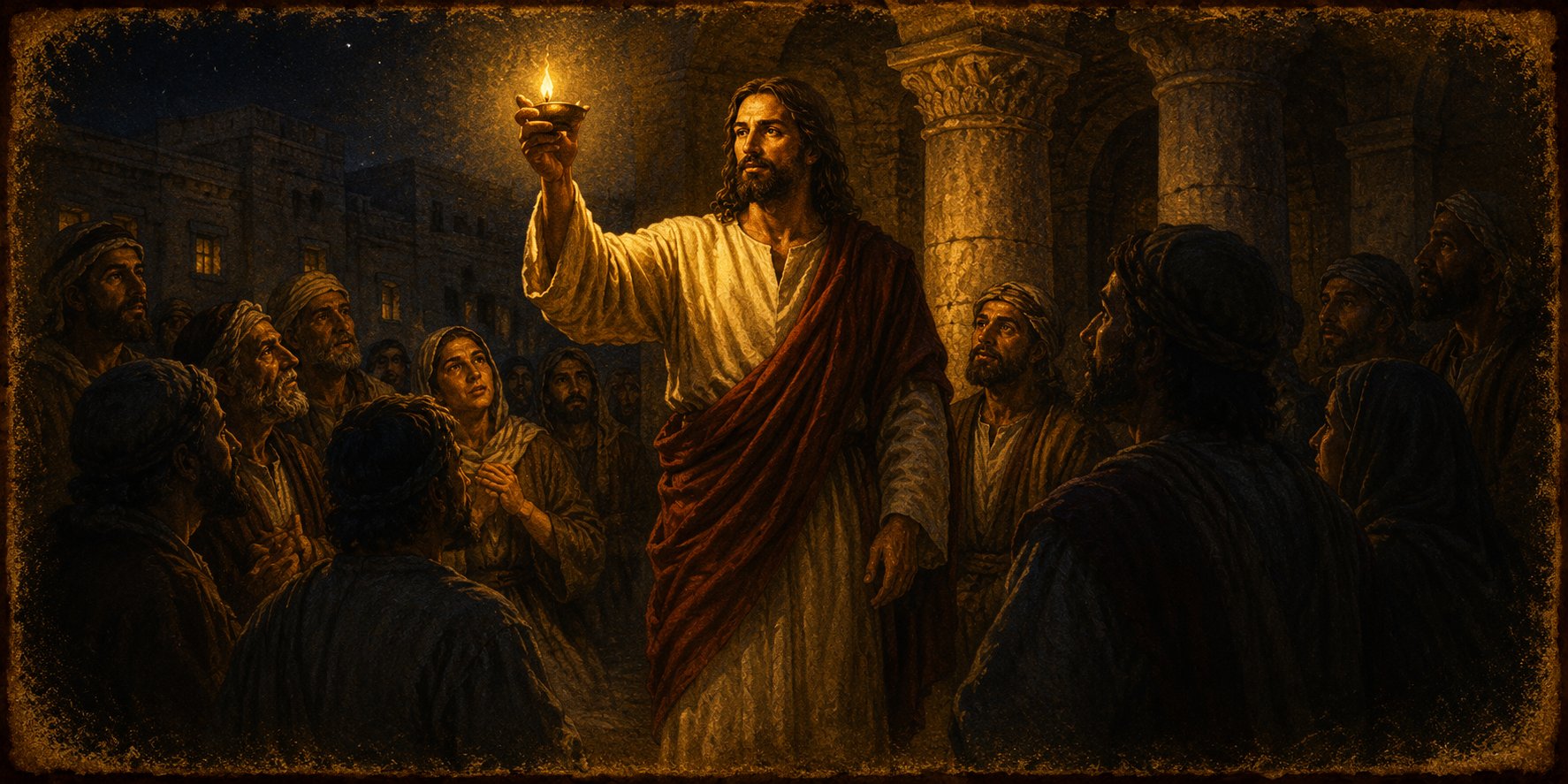
“I am the light of the world. He who follows me will not walk in the darkness, but will have the light of life.”
Follow Him and you never have to walk blind again.
John 8: 12
Location: The temple courts during the Feast of Tabernacles (John 8:12). Giant lamps blaze in the courtyard, commemorating the pillar of fire that guided Israel in the wilderness.
Atmosphere: The night glows with ritual light, yet spiritual darkness covers many hearts. The Pharisees stand nearby, skeptical; the disciples listen, sensing divine authority.
Backdrop: Jesus stands before the lamps and declares, “I Am the Light of the World.” The symbolism is stunning — He’s not one of many lights, but the eternal flame that never fades.
“I Am” — the divine echo continues; He is the same Light that led Israel by fire.
“The Light of the World” — illumination for all nations, not just Israel.
Revelation: He exposes truth and reveals the Father’s heart.
Guidance: Light shows the path — disciples walk safely in His glow.
Transformation: Light doesn’t just reveal; it changes what it touches.
Victory: Darkness cannot overcome Him — His light conquers confusion, fear, and sin.
Contrast: The temple lamps would soon burn out; His light never will.
Covenant Fulfilment: The same fire that led Israel now burns within believers — the indwelling Spirit.
Discipleship Insight: To follow Him is to walk illuminated — no longer stumbling in shadow, but seeing with clarity and purpose.
Prophetic Foreshadowing: The Light will soon be “snuffed out” at the cross, only to blaze again in resurrection glory.
Completes the covenant rhythm: Gate → Shepherd → Bread → Light. Entry, relationship, sustenance, illumination — the full revelation of covenant living.
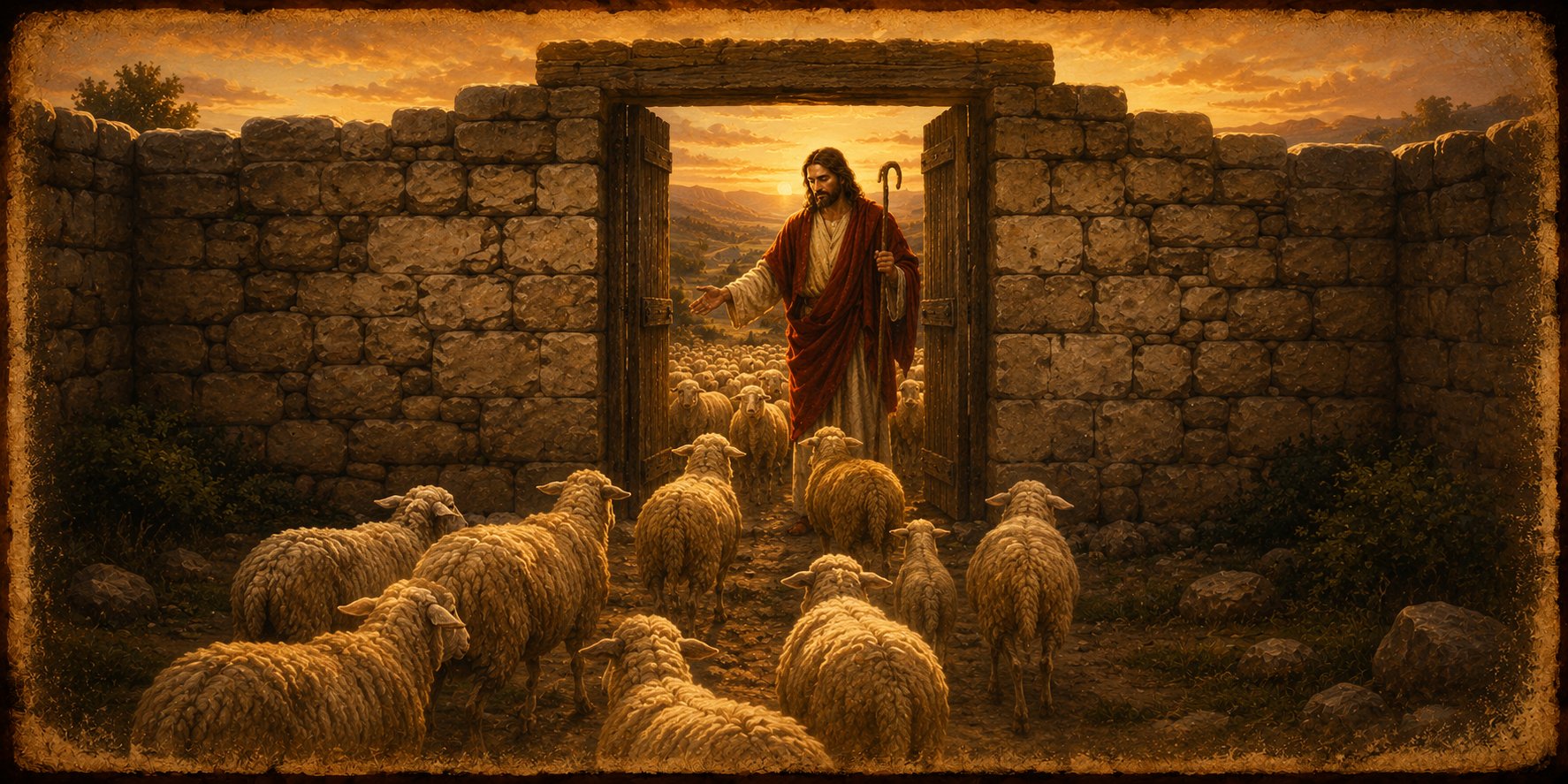
“I am the door. If anyone enters in by me, he will be saved, and will go in and go out, and will find pasture.”
One way in — and it stands wide open.
Location: Near the sheepfold, just after Jesus has healed the man born blind (John 9). The Pharisees are questioning His authority, and Jesus turns the moment into a living parable.
Atmosphere: The air is charged with tension — religion versus revelation. The disciples stand nearby, listening as Jesus contrasts the hired hands and thieves with the true shepherd.
Backdrop: A stone enclosure, a single narrow gate, sheep resting inside. The simplicity of the scene hides a profound truth: access to God’s kingdom is not through ritual or rank, but through relationship with the Shepherd Himself.
“I AM” — The divine echo of Exodus 3:14. He’s not describing a role; He’s declaring identity.
“The Gate” — The threshold between danger and safety, exclusion and belonging. He’s both the entrance and the guardian.
Access: Through Him alone we enter salvation — no other doorway leads to the Father.
Protection: He stands watch; no thief or wolf passes unnoticed.
Provision: Inside His fold, the sheep find pasture — spiritual nourishment and rest.
Contrast: The Pharisees claimed authority but offered bondage; Jesus offered freedom and life.
Covenant Reality: The gate is not a barrier but an invitation — the covenant door swung open by grace.
Discipleship Insight: To follow Him is to live within His fold — secure, guided, and sustained.
Prophetic Foreshadowing: Soon, the Shepherd will lay down His life for the sheep, becoming the gate through His own sacrifice.
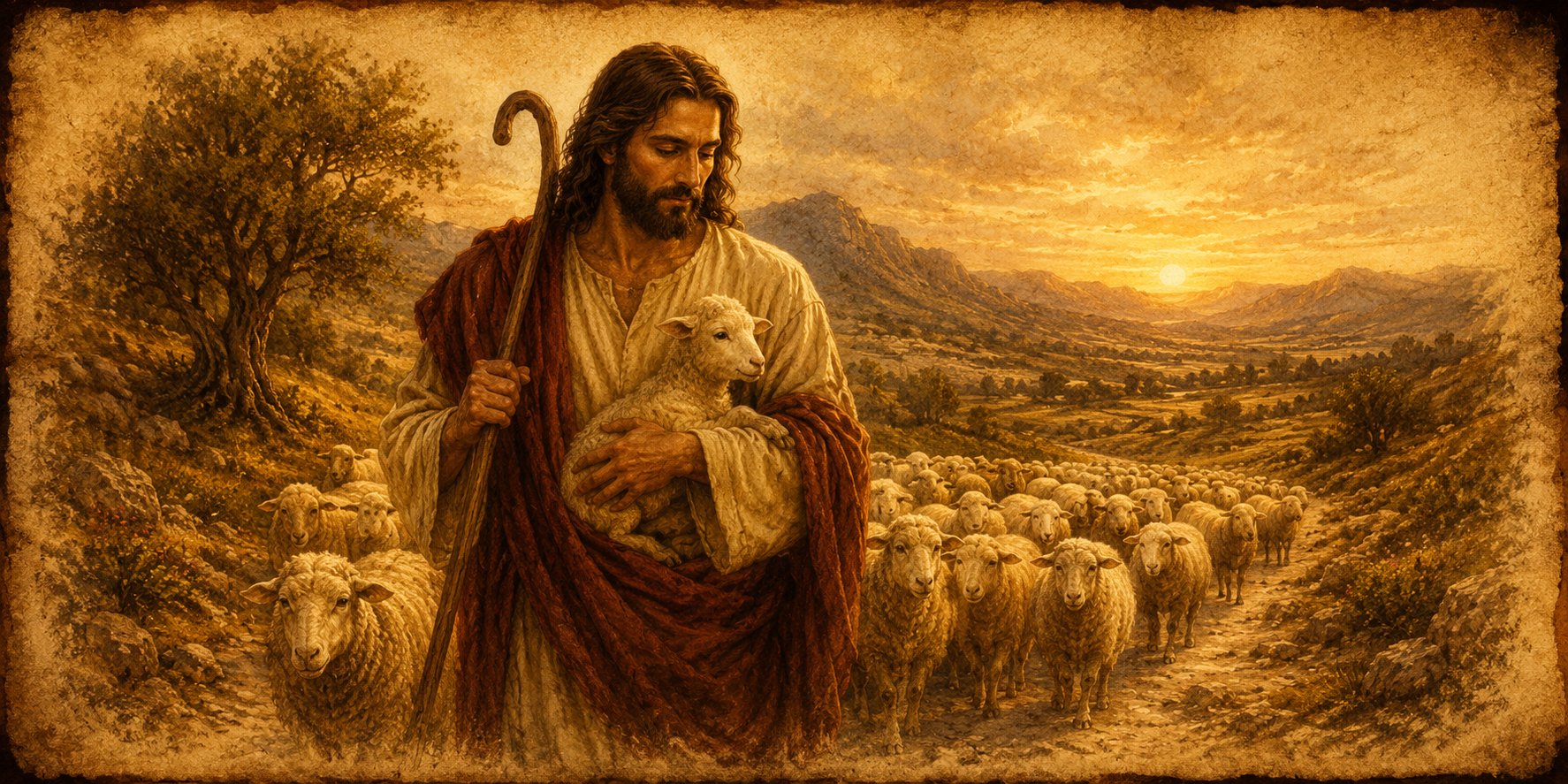
“I am the good shepherd. The good shepherd lays down his life for the sheep.”
The Shepherd who lays down His life for the flock — not one who runs.
Location: Still near the sheepfold, continuing from John 10. The crowd includes Pharisees, disciples, and common listeners.
Atmosphere: The tension of religious debate softens as Jesus shifts from confrontation to comfort — He moves from defending His authority to revealing His heart.
Backdrop: The Shepherd stands among His flock, the gate behind Him open, the sheep gathered close. The tone is pastoral yet prophetic — He’s speaking of His coming sacrifice.
“I Am” —
Again, the divine signature. He’s not describing a profession but revealing the eternal nature of God’s care.
“The Good Shepherd” —
The adjective good (Greek kalos) means noble, beautiful, worthy — not merely moral.
Intimacy: He knows His sheep by name — relationship, not religion.
Sacrifice: He lays down His life for the sheep — covenant love expressed through death.
Guidance: He leads them out and in — continual care, not occasional rescue.
Unity: “One flock, one Shepherd” — the merging of Jew and Gentile under one covenant banner.
Contrast: False shepherds exploit; the Good Shepherd gives.
Covenant Fulfilment: Echoes Ezekiel 34 — God Himself promised to shepherd His people. Jesus now stands as that fulfillment.
Discipleship Insight: To follow Him is to live under His voice — not driven by fear, but drawn by recognition.
Prophetic Foreshadowing: The cross is already in view — the Shepherd will become the Lamb, laying down His life to secure the flock’s eternal safety.
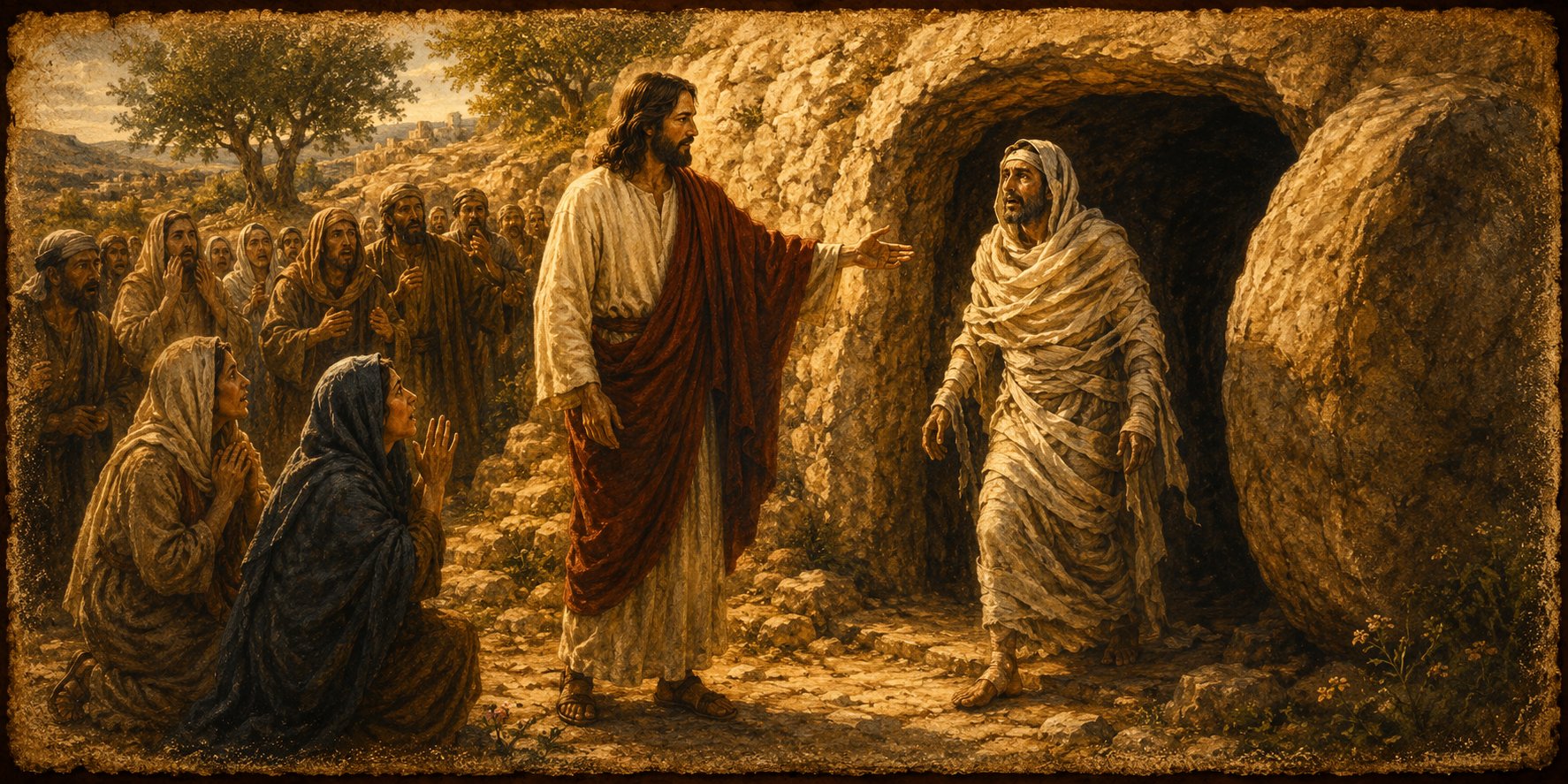
“I am the resurrection and the life. He who believes in me will still live, even if he dies.”
Death doesn’t get the last word when He holds the keys.
“I Am the Resurrection and the Life” is the crescendo of the covenant sequence — where the Shepherd not only sustains but revives.
Location: Bethany, outside Lazarus’s tomb (John 11). The air is heavy with grief; Martha and Mary are weeping, the crowd murmuring.
Atmosphere: Death seems final, faith feels fragile. Jesus stands before the tomb — calm, resolute, radiant with divine authority.
Backdrop: The stone sealed over the darkness becomes the stage for revelation. The Shepherd now speaks life into the silence of death.
“I Am” — the eternal declaration continues; He is not merely a messenger of life but its source.
“The Resurrection and the Life” —
Two dimensions of divine power: Resurrection conquers death;
Life sustains forever.
Resurrection: He reverses decay — not only physical death but spiritual hopelessness.
Life: He imparts vitality that transcends mortality.
Faith: “He who believes in Me will live, even though he dies” — covenant assurance beyond the grave.
Victory: Death is not the end; it becomes the doorway to glory.
Contrast: Martha believed in future resurrection; Jesus revealed present power.
Covenant Fulfilment: The Shepherd now proves He is not just the feeder of life but the restorer of it.
Discipleship Insight: To follow Him is to live resurrected — walking in newness, not waiting for someday.
Prophetic Foreshadowing: Lazarus’s rising prefigures Christ’s own — the tomb will not hold the Life Himself.
This edition completes the rhythm of Gate → Shepherd → Bread → Light → Resurrection. Entry, relationship, sustenance, illumination, renewal — the covenant cycle now breathes eternal life.
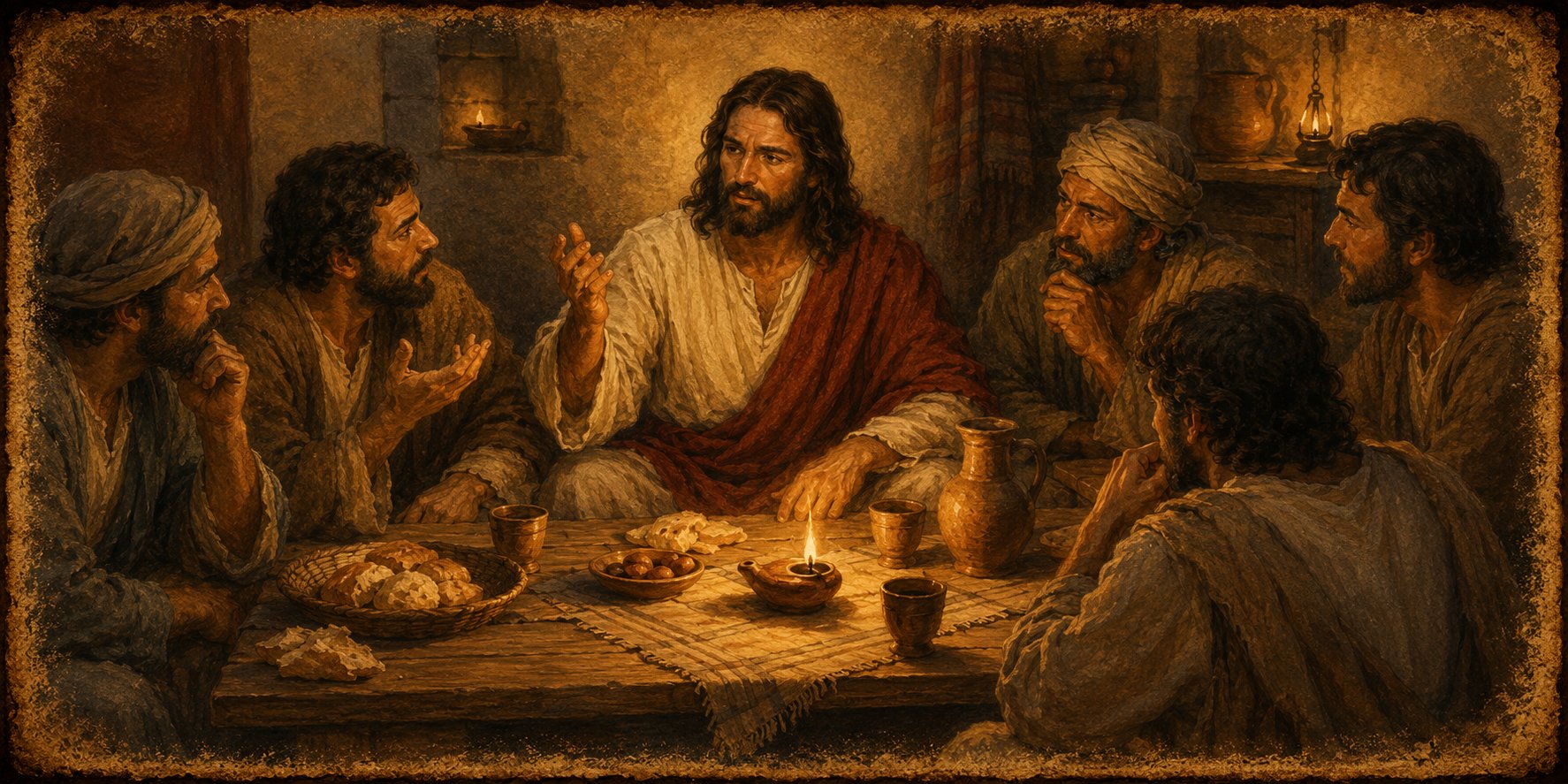
“I am the way, the truth, and the life. No one comes to the Father, except through me.”
Not a map to the Father — the road itself.
The backdrop is the Last Supper, an intimate and tense moment. Jesus has just spoken of betrayal, departure, and His going to prepare a place. The disciples are unsettled, and Thomas voices what many are thinking: “Lord, we don’t know where you are going, so how can we know the way?” (John 14:5). That question cracks open the door for Jesus’ profound declaration: “I am the Way, the Truth, and the Life.”
Atmosphere: The room is heavy with confusion and sorrow. Judas has left, the shadow of betrayal lingers, and the disciples are struggling to process what “going away” means.
Thomas’ confusion: He represents the honest disciple — loyal, but unable to grasp the unseen. His question is raw, almost desperate.
Backdrop: The Passover table, bread and wine before them, becomes the stage for Jesus to redefine covenant reality.
Way: He answers Thomas directly — the “where” is the Father’s presence, and the “how” is Himself. The road is not geographical but relational.
Truth: In the midst of uncertainty, He anchors them. Truth is not a map or doctrine, but His own person.
Life: With death looming, He assures them that life is not ending — it is about to be unveiled in resurrection power.
Jesus doesn’t rebuke Thomas for confusion; He uses it to reveal the deepest covenant reality.
The disciples are about to lose sight of Him physically, but He gives them categories —
Way, Truth, Life — that will carry them through the cross, resurrection, and Pentecost.
Each word is a lifeline: direction for the lost, clarity for the confused, vitality for the fearful.
It’s striking that this teaching doesn’t happen in a synagogue or on a hillside, but around a table of bread and wine — the covenant meal itself. That backdrop makes His words not abstract theology, but living covenant: He is the Way they will walk, the Truth they will cling to, and the Life they will receive through His broken body and poured-out blood.
When Jesus says He is the way: It’s not a way – It’s the Way the only Way
You see this way - He isn’t just stringing together lofty words. Each term is a doorway into a deeper reality.
Let’s open them one by one: The Way
Path of access: He is not a way among many, but the way to the Father. The road is exclusive, yet open to all who believe.
Journey imagery: Think of Israel’s wilderness path — cloud by day, fire by night. Christ is the living guide who leads us home.
Discipleship demand: Following Him means walking His road, not ours. It’s obedience, not convenience.
The Truth
Revelation of God: Truth isn’t not some theoretical concept; it’s represents Christ. He is the Word made flesh, the perfect disclosure of the Father.
Light connection: Truth shines like light — exposing lies, clarifying direction, and revealing reality as it is.
Reliability: Unlike shifting philosophies, His truth is unchanging. It anchors us in covenant certainty.
The Life
Breath of God: He is the source of eternal vitality. Not borrowed life, but created life flowing into us.
Resurrection power: Life means victory over death — both physical and spiritual.
Abundant living: It’s not survival, but fullness. Grace, joy, and fruitfulness spring from His presence.
How They Connect
The Way gives direction.
The Truth gives clarity.
The Life gives vitality. – Vigor, energy, strength, animation
Together they form a complete covenant reality: Path
perspective
power.
Without one, the others collapse. With all three, discipleship becomes whole.
I’d say this triad is Jesus’ ultimate rebuttal to stage-pew Christianity:
He doesn’t offer
a philosophy,
a ritual, or a performance —
He offers Himself as
the living road,
the radiant truth, and
the eternal life.
Lets see what the Gate has in store
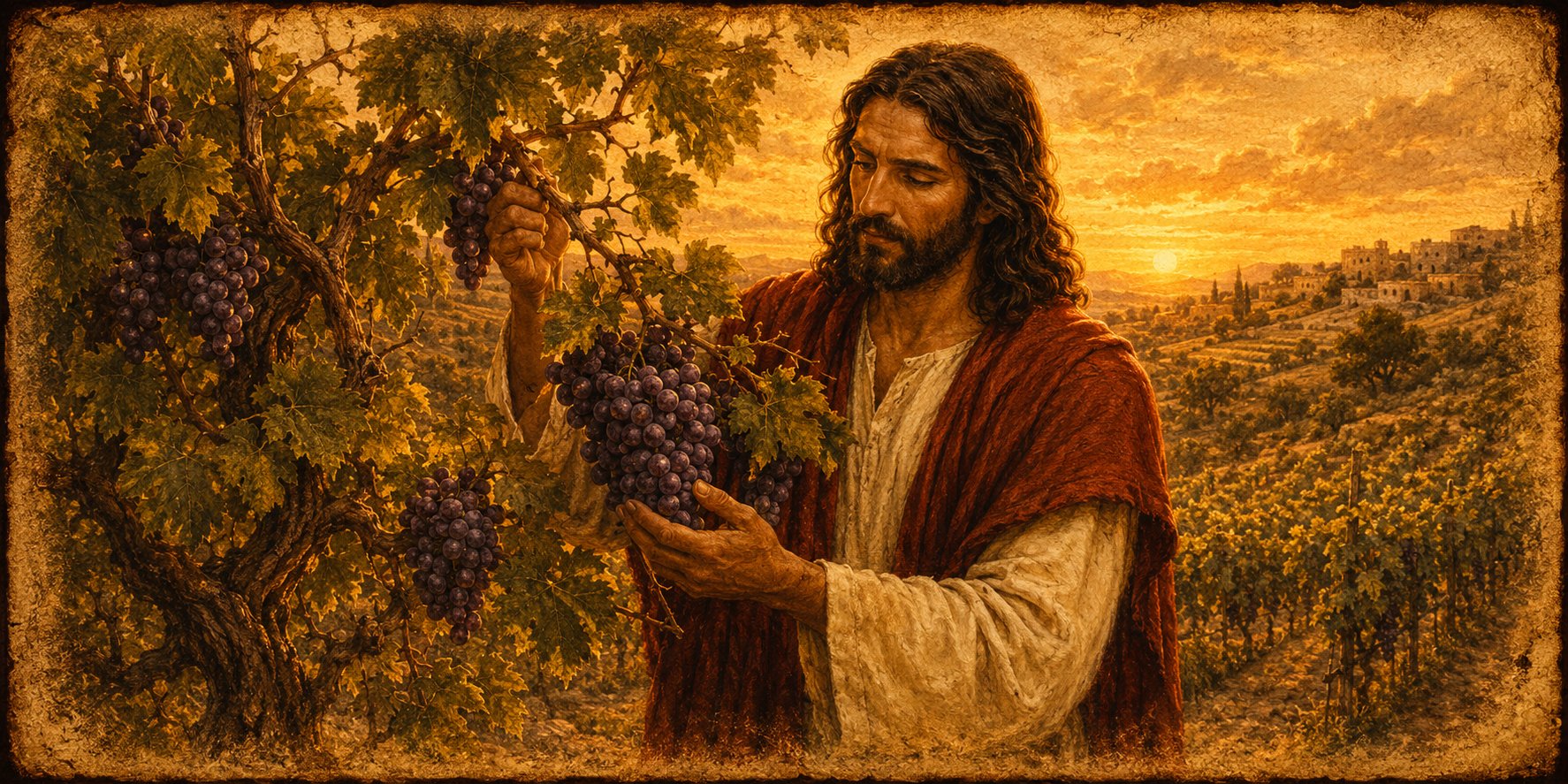
“I am the vine. You are the branches. He who remains in me and I in him bears much fruit, for apart from me you can do nothing.”
Stay joined to the Vine, and the fruit takes care of itself.
“I Am the True Vine.” This is the covenant’s abiding heartbeat — the Shepherd who resurrects now teaches His disciples how to remain alive in Him.
Location: The upper room, just after the Last Supper (John 15). The disciples are still absorbing the weight of His words — betrayal, departure, promise.
Atmosphere: The night is quiet, the lamps flicker, and the vine imagery from the Passover wine lingers. Jesus speaks of connection, fruitfulness, and pruning.
Backdrop: The Shepherd now becomes the Vine — the source of life flowing through every branch.
“I Am” — the divine identity continues; He is not describing a metaphor but revealing the covenant structure of life.
“The True Vine” —
The genuine source, not the imitation. Israel was the vine that failed; Christ is the vine that fulfils.
Connection: - Relationship
“Abide in Me and I in you” — the covenant of continual union.
Growth: The Father prunes fruitful branches to bear more fruit.
Dependence: “Apart from Me you can do nothing” — discipleship rooted in divine life.
Fruitfulness: The evidence of abiding — love, obedience, and lasting impact.
Contrast: Religion produces effort; relationship produces fruit.
Covenant Fulfilment: The Vine replaces the old system — life now flows directly from Christ.
Discipleship Insight: To follow Him is to remain connected — not striving, but abiding.
Prophetic Foreshadowing: The wine of communion will soon symbolize this abiding life — His blood flowing through the branches.

“I am the way, the truth, and the life. No one comes to the Father, except through me.”John 14:6
The same path, morning and evening — the I AM Journey to walk by day, and the rest of the I AM to settle into at nightfall.


From new birth to the Cross — the Spirit leads every step.

— Artwork pending Grant’s text corrections (dates) —
The great I AM still says, “Come, follow Me.”
Be Born Again